Showing posts with label DIPLOMACY. Show all posts

Tuesday, September 29, 2009

Iran's Response: Trying to Play the Game

In the wake of the UN's blistering offensive against nuclear proliferation lead by the new head of the UN Security Council, President Obama, Iran responded in a manner more suiting to North Korea. The fact of the matter is that Iran is beginning to squirm under the pressure and their actual power in the structure of world powers is beginning to emerge along with their grasp of the diplomatic process.

In my last post, I talked about the subtleties of diplomacy between Russia and the US. When it comes to the subject, Russia and the US have a long and rich history and provide us with a wealth of diplomatic back and forth from which we can perceive plenty of patterns and innuendo. But, the fact of the matter is that the relationship between Russia and the US is unique because it involves complex economic and military elements. Also, while the Cold War helped revolutionize the diplomatic process, it is more of an exception than a rule due to its one-of-a-kind nature. What we see in the back and forth between Russia and the US is like a ballet or a game of chess.
When it comes to countries like Iran or North Korea, diplomacy is more like a bull fight. North Korea is notorious for agreeing to terms and then reversing course, usually with a new round of missile tests and public condemnations of the West. They employ this strategy because, in the past, it gives them short term leverage to get resources including food, medical supplies, and oil. Iran, faced with becoming as isolated as North Korea, is beginning to adopt the same strategy in order to fight off a new round of international sanctions.

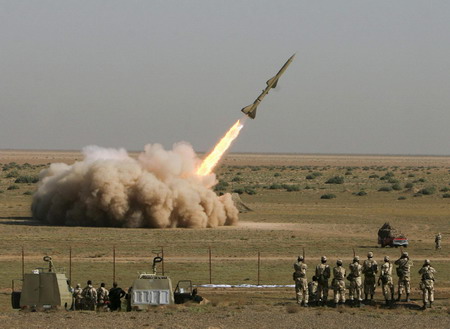
After the recent meetings on nuclear proliferation, Iran has issued biting criticism of the UN, saying that they are simply following orders from Western powers, while re-affirming their rights to nuclear energy in the same breath. They followed up their public rantings with a fresh round of missile tests, showing off a new short range missile that wouldn't take too much modification to be nuclear capable. Together, these two events show that Iran is becoming desperate. Instead of engaging the UN and following through on their promise to open up their sites to IAEA inspection, Iran issues blistering criticisms and puts on the military version of a dog and pony show, thinking that it will get them some kind of leverage.

The gut check here is one of chagrin. Things got a lot worse for North Korea before they got any kind of material concessions from the West. Considering the the fact that the recently revealed secret nuclear facility is near a military base, Iran's "diplomatic gestures" are more likely to induce a new round of sanctions than elicit concessions. While the Western world hasn't reached a consensus on the status of Iran's nuclear weapons program, things certainly aren't looking peaceful, especially since Iran still hasn't opened up any of their facilities to IAEA inspection, including the not-so-secret facility. Maybe now, Russia won't be so suspicious of our mobile missile interceptors.

Saturday, September 26, 2009

Fruits of Our Labors: Squeezing Iran

Current analysis would indicate that the critics were right when they criticized Obama's scrapping of the Euro missile shield, saying it would embolden Russia. In diplomacy, just like in business or any other profession that involves trading or negotiating, all parties have a vested interest in eliciting concessions from the other side while minimizing concessions of their own, especially when it comes to major issues or national interests. The main reason to not make concessions when it comes to one's national interests (in the case of the Euro missile shield, national security) is literal: conceding on one's national interests weakens one's soft and hard power. The secondary reason, having perhaps an even more significant impact, is the fact that making concessions weakens one side's bargaining power and gives opposing sides the perception that the one side is willing to back down, thereby opening the door to aggression by opponents.

However, what often goes unnoticed is that there are two different types of diplomacy: public and private. There is what we as citizens and information consumers see and there is what actually goes on between nations. Simply put, what we read in the news paper and what policy think tanks put out is based on official accounts released by governments and close analysis of news sources. That account isn't always the whole story. When it comes to the relationship between the US and Russia, what we get in the news is rarely the whole story. If you read between the lines, you can begin to see that the current situation over the Euro missile shield isn't exactly how it appears.

When Obama chose to scrap the Euro missile shield, he did compromise on one aspect of our national security. However, the Euro missile shield was a good example of why pursuit of absolute security is in fact counter productive as it was pushing our relationship with Russia to the brink and possibly putting us on the path to a military confrontation. Nixing the Euro missile shield helped our diplomatic position with Russia, giving us a boost in relations and giving us credit with Medvedev. The effects of this concession can be clearly seen in the debate over Iran's nuclear program, a program which would not exist without Russia's assistance. Earlier this month, Russia wholly opposed new sanctions on Iran. Following Obama's scrapping of the Euro missile shield, Russia did a u-turn and now will support new sanctions on Iran while praising Obama's move in the same breath.

With Russia's help, the US is turning up the heat diplomatically on Iran and they are starting to squirm. The first piece of evidence is that Iran spontaneously admitted to the existence of a secret nuclear facility that, by all reports, is still under construction. Of course, Israel wasted no time in declaring this facility a nuclear weapons factory. Iran continued to backpedal, saying that they would allow the International Atomic Energy Agency (IAEA) to inspect the newly revealed nuclear facility in the hopes that they could beat back accusations that they are violating IAEA regulations. But, their efforts aren't working. The new revelation simply gives the US and international opposition more ammunition in their push for new sanctions. While China is still blocking new sanctions, Russia's change of heart is providing the US with key support that enables us to put the screws to Iran. Remember, Russia is currently the sole source of nuclear fuel to Iran.

The gut check here is fortuitous. Obama's first major diplomatic move is proving effective despite what the critics are saying. He is re-dedicating the US to the diplomatic process and it is paying off. However, the next twelve months are key to testing whether new boosts in relations and new opportunities are utilized or squandered. While Obama's redoubled diplomatic efforts are currently working for Iran, Venezuela is fast becoming a new crisis right in our own backyard. But, now that Obama is heading up the UN Security Council, his re-dedication to diplomacy is going to be infinitely more effective as he now has a direct channel to world leaders and an international body that has the authority to authorize and enforce international actions. While the UN faltered, became stagnant, and even irrelevant under Bush, the UN will be reborn from the ashes under Obama. Hopefully Obama is just as effective at being a world leader as he is at public speaking.

Thursday, August 6, 2009

New Promises, Old War

Today, Secretary of State Hillary Clinton traveled to Africa to issue a new pledge of support for Somalia in its on-going conflict with insurgent group Al Shabaab. Secretary Clinton also issued a sharp rebuke to neighboring Eritrea for its alleged support of Al Shabaab and promised to pursue sanctions. But, at a time when our armed forces are stretched thin and entirely committed to the campaigns in Iraq and Afghanistan, what kind of support can we actually give?

Somalia has been plagued by war since the 1970's and has essentially been under failed state status since the beginning of the Somali Civil War in the early 1990's. Extremist Islamic groups began consolidating power by recruiting local war lords from 2004 to present. Ethiopia intervened and, together with African Union forces as well as international military support including US gunships, shut down the radical Islamic pseudo government called the Islamic Courts Union. But, in early 2009, Ethiopia withdrew, leaving behind the AU peacekeepers who were wholly unprepared for the coming rewnewal of conflict.

Here in the US, we only recently gained insight into new developments in Somalia when several Somali immigrants suddenly returned to Somalia to take part in the resurgent civil war. The catalyst was when one of the naturalized US citizens returned to Somalia and became the first American to ever carry out a suicide bombing. Now, Somalia is suddenly back on the map in terms of foreign policy. The country is under constant assault from a terrorist organization (Al Shabaab) known to have ties to Al Qaeda.

So why don't we have troops there? Simply put, we don't have the man power. The US can't afford to send valuable logistical resources and troops to Somalia when we are already falling behind in Afghanistan and trying to finish out the campaign in Iraq. Also, the infamous Black Hawk Down scenario is a sharp reminder of how easy it can be to get bogged down in Somalia.

The gut check here is rather bitter. Somalia is one of those places where we should have done it right the first time, but politics got in the way of conducting military opperations. Now, years later, Somalia is a breeding ground for Al Qaeda. But, the fact that the AU is beginning to stand on its own changes the situation dramatically. If an AU lead operation were to be successful in Somalia with help from the international community, the AU would gain extreme amounts of credibility in conflict solving. Right now, Secretary Clinton's diplomatic strategy, putting the pressure on those who supply Al Shabaab (allegedly Eritrea) and other insurgent groups, is the prudent course. If it gets to the point where we have to send military forces, I hope we send something harder to hit with an RPG than a black hawk.